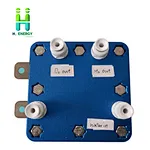
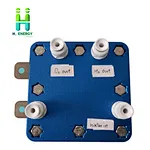
3000ML PEM proton exchange membrance electrolyzer
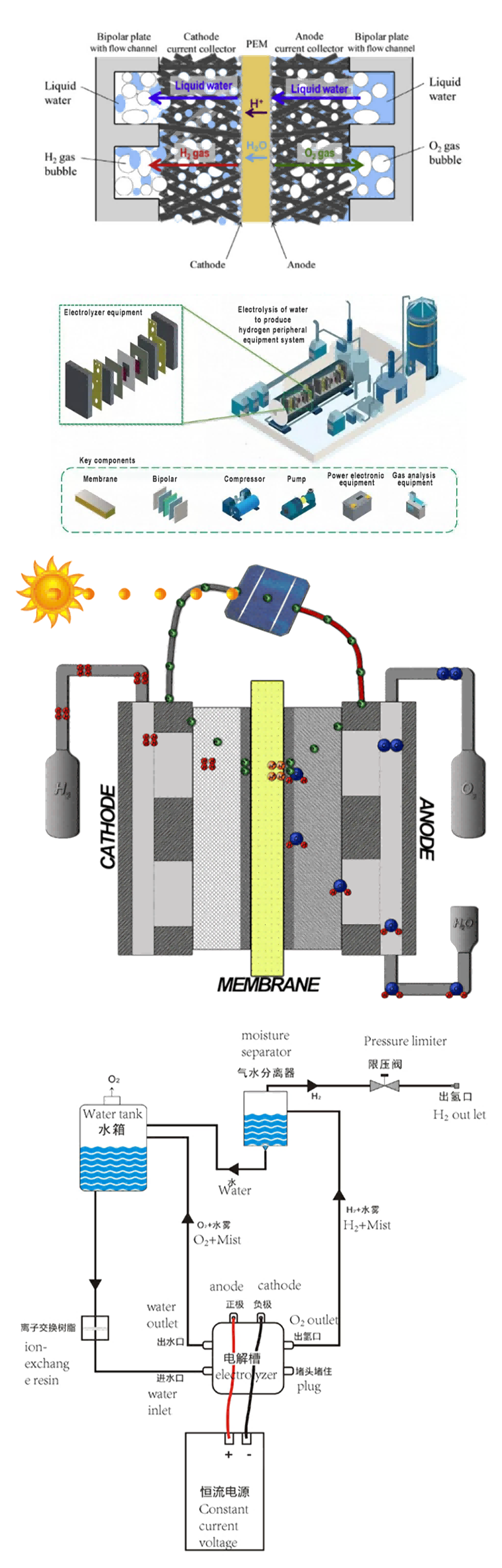
Compared with alkaline electrolysis water hydrogen production technology, PEM electrolysis water hydrogen production technology has more unique characteristics of high current density, high purity of hydrogen and fast response speed. The purity of hydrogen production in the PEM electrolytic cell is usually about 99.99%. One of the largest advantages is its ability to operate at high current densities. This can result in reduced operational costs.
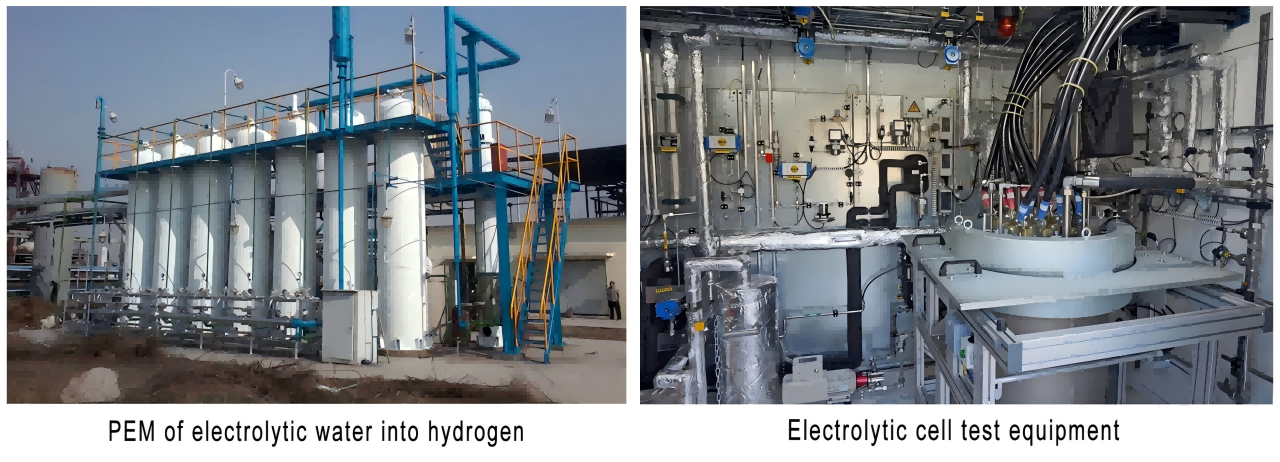
The application prospect of PEM electrolytic cell is very broad. In the field of transportation, the construction of hydrogenation stations will require a large number of PEM electrolytic cells to produce high-purity hydrogen and provide fuel for fuel cell vehicles. In the industrial field, the hydrogen produced by PEM electrolytic cell can be used in chemical production, petroleum refining and other processes, to achieve green industrial transformation.
Appilcations:
Industrial field (chemical production, petroleum refining)
Green hydrogen (agricultural decarbonization)
Hydrogenation station (fuel infrastructure for hydrogen-powered vehicles)
Electronic fuel (hydrogen production + carbon capture)
Distributed energy (field for hydrogen production and hydrogenation)
Datasheet_PEM Electrolyzer | |||||||||
Model | Unit | PEM-150 | PEM-300 | PEM-600 | PEM-1000 | PEM-1500 | PEM-2000 | PEM-3000 | PEM-8000 |
Cells | 2 | 1 | 2 | 4 | 6 | 8 | 12 | 32 | |
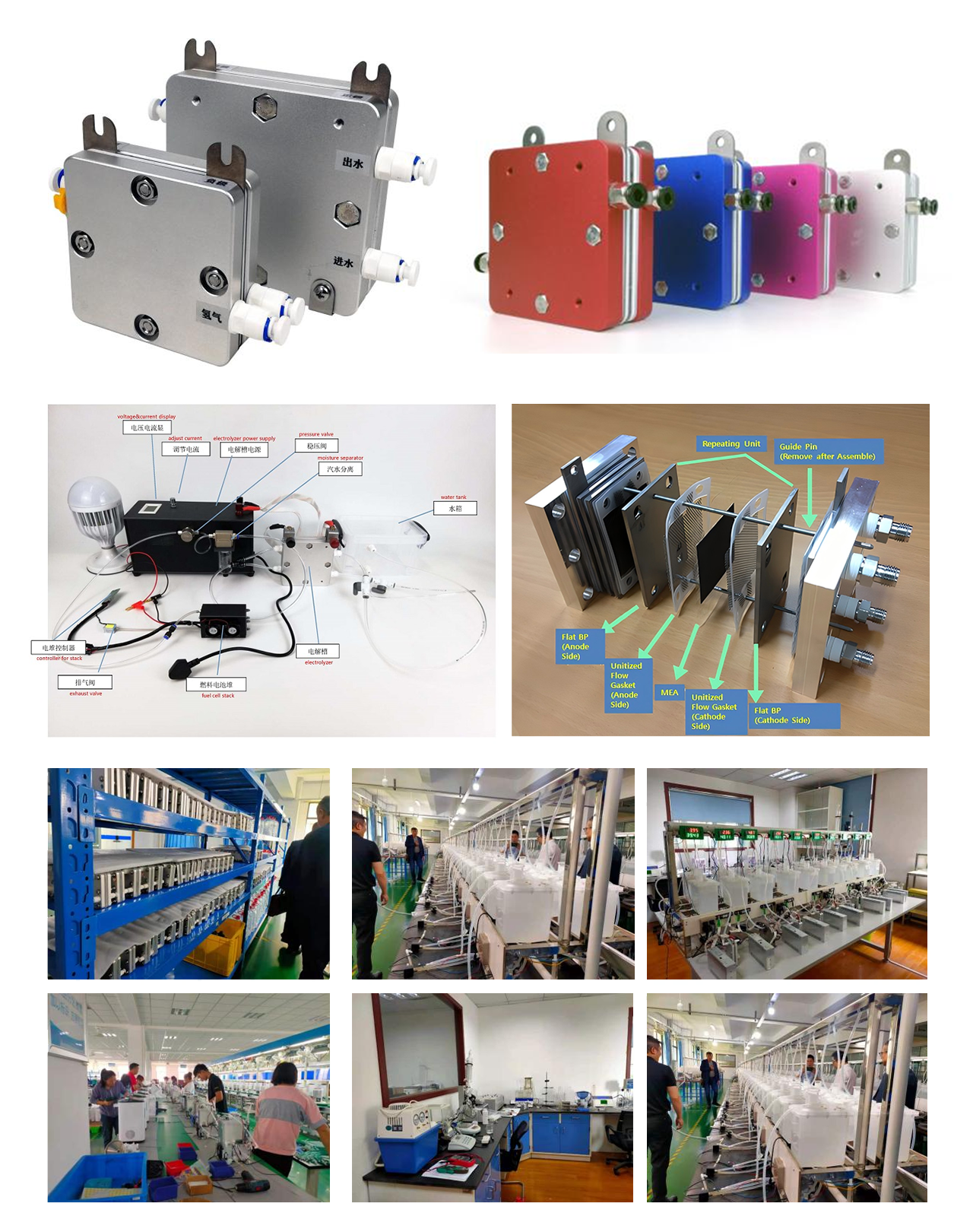
Stack Diameter | mm | 85 | 138 | 138 | 138 | 138 | 138 | 138 | 138 |
H2 Flow Rate | mL/min | 0-150 | 0-300 | 0-600 | 0-1000 | 0-1500 | 0-2000 | 0-3000 | 0-8000 |
02 Flow Rate | mL /min | 0-75 | 0-150 | 0-300 | 0-500 | 0-750 | 0-1000 | 0-1500 | 0-4000 |
Voltage | V(DC) | 2-5 | 2-5 | 4-7 | 8-10 | 11-14 | 15-18 | 20-23 | 26-30 |
Max Input Current | A(DC) | 20 | 40 | 40 | 40 | 40 | 40 | 80 | 120 |
Water Consumption Rate | cc /hr | 12 | 18 | 36 | 60 | 60 | 60 | 90 | 120 |
Operating Temperature | 5℃ to 45℃ | ||||||||
Output Pressure | 0~1MPa | ||||||||
MembraneType | Nafion PFSA | ||||||||
Sintered Titanium diffusion medium | |||||||||
Precious metalelectrode | |||||||||
Need deionized or re-distilled water | |||||||||
Water Resistivity:>1 MQ*cm | |||||||||
Water Conductivity:<1 us/cm | |||||||||
Estimated Lifetime:If the water quality and power supply is always in ideal condition you canexpect about 10,000 hoursof operation. | |||||||||