Analysis of the Production Process of Graphite Bipolar Plates
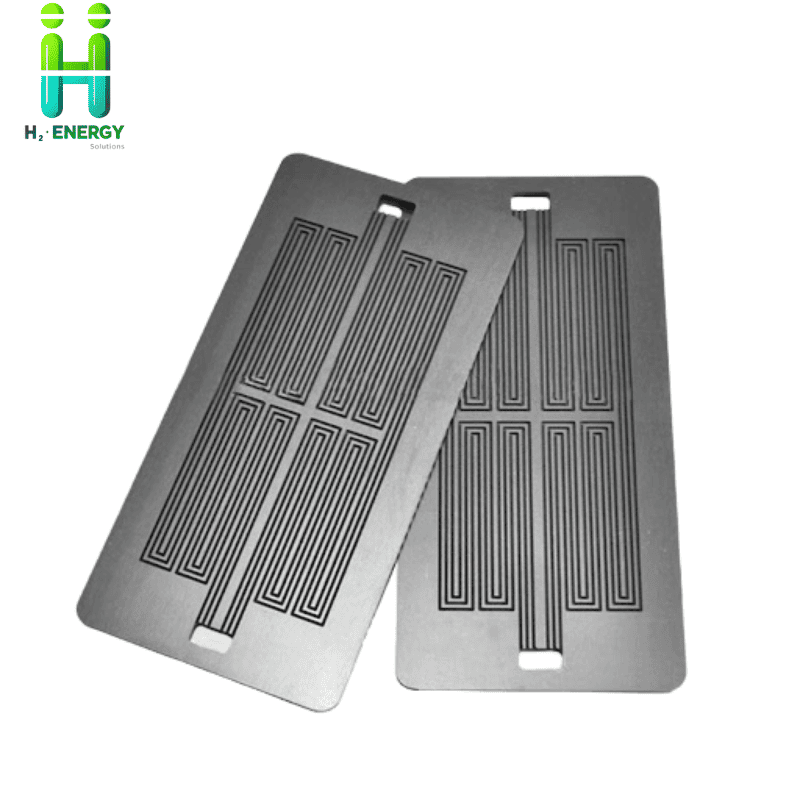
Performance of bipolar plates in fuel cells:
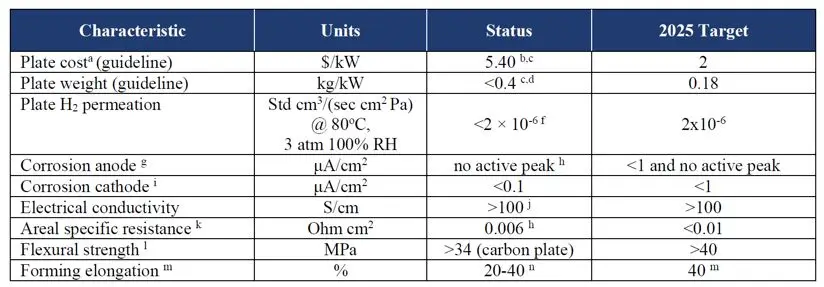
Bipolar Plate Performance Requirements and Graphite Material Selection
The cost, mechanical properties, gas barrier performance, corrosion resistance, electrical conductivity, and surface contact resistance of bipolar plates serve as critical core indicators with stringent requirements. Consequently, the selection of raw materials and processing techniques for graphite bipolar plates directly impact their ability to meet the demands of target markets.
Raw Material Forms and Processing Diversity
Manufacturing processes for graphite plates vary significantly. Key materials include graphite materials, resin impregnants, curing agents, etc. The types, specifications, and grades of raw materials differ substantially based on the specific plate manufacturing process.
To accommodate different process requirements, graphite raw materials for bipolar plates primarily exist in the following forms:
- Powders
- Rolled materials (e.g., expanded graphite rolls)
- Sheet materials (e.g., expanded graphite boards)
These base materials derive from three graphite types:
Graphite Powder
A chemically reactive substance whose resistivity varies across environments, depending on whether continuous conductive pathways can be maintained within insulating matrices. It exhibits excellent high-temperature resistance, chemical stability, plasticity, and thermal plasticity.
Expanded Graphite
Produced by intercalating, washing, drying, and high-temperature expansion of natural graphite flakes, forming a porous, worm-like structure. Beyond inheriting natural graphite’s superior properties, it possesses unique characteristics like flexibility, compressibility, resilience, adsorption capacity, and radiation resistance. Upon high-temperature exposure, its volume instantly expands 150–300 times.
Flake Graphite
Features complete crystallization as a natural crystalline graphite. With a fish-scale morphology and hexagonal layered structure, it demonstrates thin, flexible flakes and exceptional physicochemical properties—including outstanding thermal conductivity, electrical conductivity, thermal shock resistance, and corrosion resistance
The continuous production and processing of graphite bipolar plates mainly fall into two categories: one is the sheet compression molding process of expanded graphite composite materials, and the other is the compression/injection molding process of graphite powder resin composite materials.
Category 1: Expanded graphite sheets are processed through 砑 light, molding and material removal before entering impregnation resin, vulcanization, bonding and sealing vulcanization processes to form bipolar plate products.
At present, this process has the following characteristics:
- It can well meet the requirements of the shape, surface geometric contour and mechanical dimensions of the plates.
- Due to the continuity of expanded graphite materials, they have relatively high electrical and thermal conductivity properties.
- The required surface hydrophobic properties need to be addressed through the coordinated processing of processes and materials.
- If the rolling process is adopted, both its design accuracy and process accuracy need to be further improved.
- The post-treatment of mold closing pressure, resin ratio and surface contact resistance is the key to affecting the performance of the plate.

Category Two: Firstly, the mixed material of graphite powder and resin is prepared. Then, the mixed material and mold are pre-treated for molding. Next, molding and vulcanization are carried out. Finally, bonding, sealing and curing are performed to form the product.
At present, this process has the following characteristics:
- It can well meet the requirements of the shape, surface geometric contour and mechanical dimensions of the plates.
- Since the mixed particles block the continuity of the graphite material, the conductivity needs to be further improved at high currents.
- Meeting the required surface hydrophobic characteristics needs to be addressed through the coordinated processing of processes and materials.
- The proportion and selection of resin, the vulcanization time and the post-treatment of surface contact resistance are the key factors affecting the performance of the plate (conductivity, mechanics, durability).

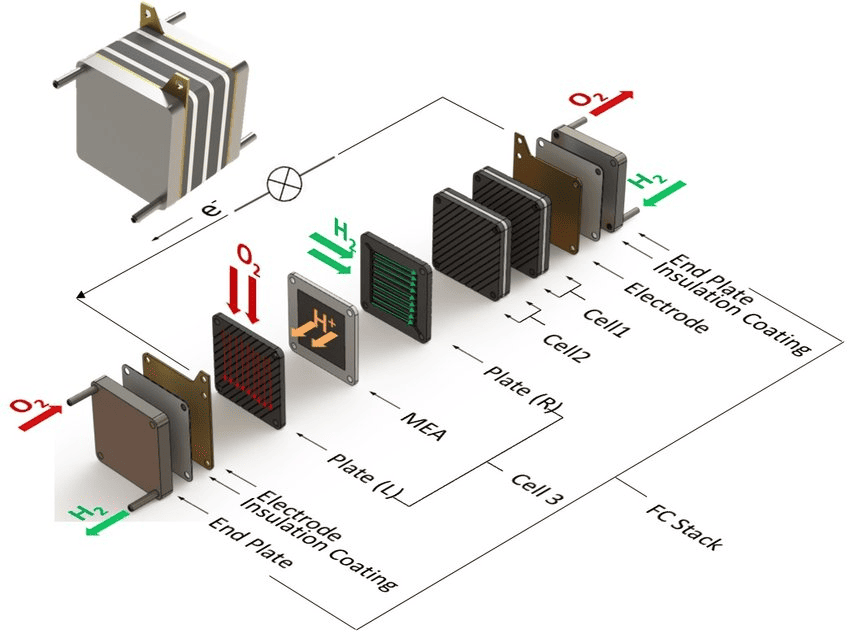
How Hydrogen Fuel Cell Structure Affects Performance?
Related Article