How Hydrogen Fuel Cell Structure Affects Performance?
author: Kelly
2025-02-21
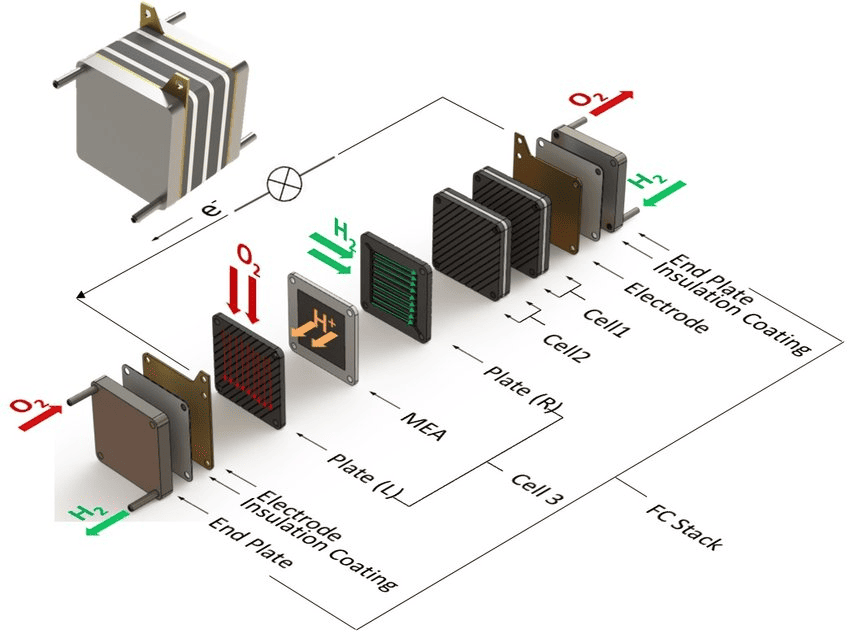
Fuel cell stack are a promising clean energy technology, which is known for high efficiency, quick response time, and the ability to operate at relatively low temperatures.This article will take a view at the inner workings of a fuel cell hydrogen and how the components of a fuel cell stacks affect its performance.
What is hydrogen fuel cell? And how does a high efficiency fuel cell work?
A proton exchange membrane fuel cell (PEMFC) is a type of fuel cell that uses hydrogen as fuel, and oxygen from the air as an oxidant. It converts the chemical energy of the hydrogen fuel into electricity by way of a chemical reaction, with water as the only residual by product.
The basic functioning of a Hycircle Hydrogen Fuel Cell Stack can be described in the following steps:
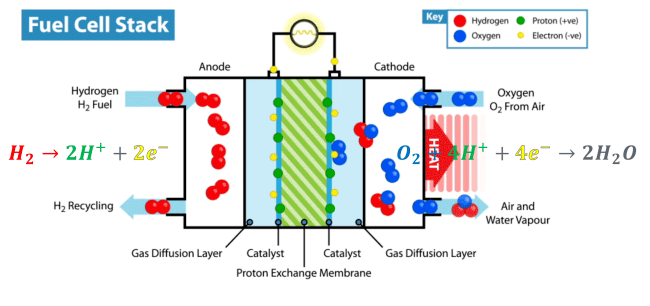
1.Hydrogen is supplied to the anode (negative electrode) of the fuel cell stacks.
2.At the anode, the hydrogen molecule is split into its individual protons and electrons. The protons pass through the proton exchange membrane (PEM) to the cathode (positive electrode), while the electrons flow through an external circuit to create an electric current.
3.At the cathode, the protons, electrons, and oxygen from the air combine to form water molecules.
4.The chemical reaction at the anode and cathode generates electricity, which can be used to power electrical devices or stored in a battery.
2.At the anode, the hydrogen molecule is split into its individual protons and electrons. The protons pass through the proton exchange membrane (PEM) to the cathode (positive electrode), while the electrons flow through an external circuit to create an electric current.
3.At the cathode, the protons, electrons, and oxygen from the air combine to form water molecules.
4.The chemical reaction at the anode and cathode generates electricity, which can be used to power electrical devices or stored in a battery.
High efficiency hydrogen fuel cell components
Polymer Electrolyte Membrane
The polymer electrolyte membrane, or fuel cell membrane (also called a proton exchange membrane)—a specially treated material that looks something like ordinary kitchen plastic wrap—conducts only positively charged ions and blocks the electrons. The PEM is the key to the fuel cell technology; it must permit only the necessary ions to pass between the anode and cathode. Other substances passing through the electrolyte would disrupt the chemical reaction. For transportation applications, the fuel cell membrane is very thin—in some cases under 20 microns.
Catalyst Layers
A catalyst layer is added on each side of the fuel cell membrane, an anodic layer on one side and a cathodic layer on the other, sandwiched between the membrane and the GDL. On the anode side, the platinum catalyst splits hydrogen molecules into protons and electrons. On the cathode side, the platinum catalyst reduces oxygen by reacting with protons produced at the anode to produce water.

Gas Diffusion Layers
The GDL are fuel cell components located outside the catalyst layer and facilitates the transport of reactants to the catalyst layer as well as the removal of product water. Each GDL typically consists of a sheet of carbon writing paper in which the carbon fibre portion is coated with polytetrafluoroethylene (PTFE). Gases diffuse rapidly through pores in the GDL. These pores are kept open by the hydrophobic PTFE to prevent excess water from accumulating. In many cases, the inner surface of the GDL is mixed with a thin layer of high surface area carbon called a microporous layer.

The microporous layer can help regulate the balance between water retention (needed to maintain membrane conductivity) and water release (needed to keep the pores open so that hydrogen and oxygen can diffuse into the electrode).
Bipolar Plates
Each MEA produces less than 1V, but most applications require higher voltages. Therefore, multiple MEAs are usually connected in series by stacking them on top of each other to provide a usable output voltage. Each fuel cell stacks is sandwiched between two bipolar plates that separate it from neighbouring cells. These plates, which may be made of metal, carbon, or composite materials, provide electrical conductivity between fuel cell hydrogen and physical strength to the stack. The surface of the plate usually contains a ‘flow field’, which is a set of channels machined or stamped into the plate to allow gas to flow through the MEA.

Gaskets
Each MEA in a fuel cell stack is sandwiched between two bipolar plates, but gaskets must be added around the edges of the MEA to make a gas-tight seal. These gaskets are usually made of a rubbery polymer.
Hycircle is Hydrogen Fuel Cell Manufacturer and assembly suppliers, which precisely customizes High efficiency hydrogen fuel cell to meet your needs, if you are interested, please feel free to inquiry us!
Contact: Kelly Feng
Mob/Whatsapp: 86-17386007648
Email: sales003@china-vet.com
Mob/Whatsapp: 86-17386007648
Email: sales003@china-vet.com
Analysis of the Production Process of Graphite Bipolar Plates
How Do Hydrogen Fuel Cells Dominate the Future of Transportation?
Related Article
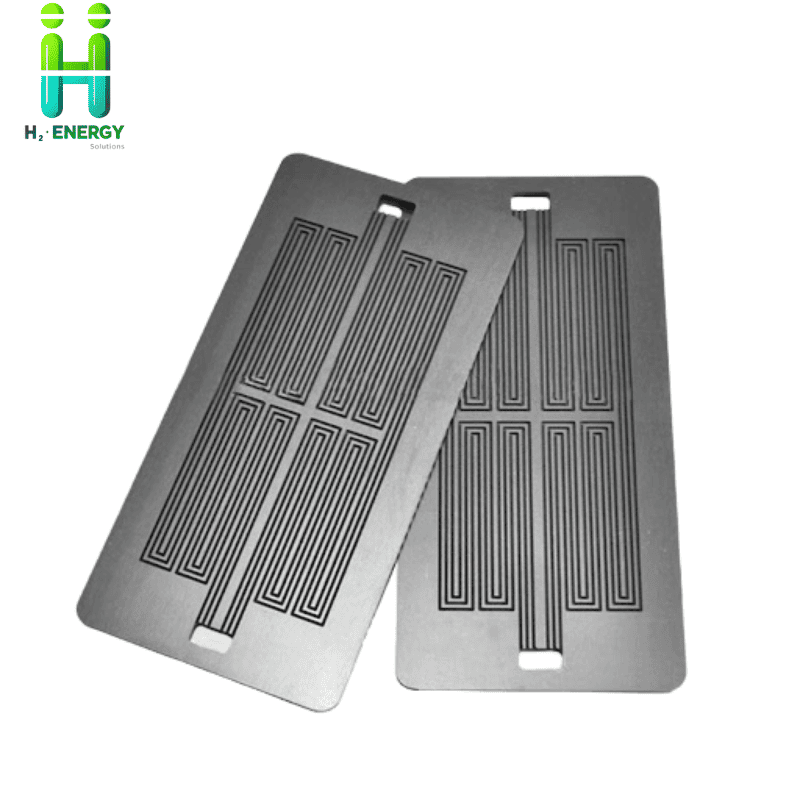
Currently, fuel cell systems in the vehicle field are mainly used in commercial vehicles, with the fuel cell stack (FC stack) as the core component being predominantly composed of graphite bipolar plates. Looking ahead, graphite bipolar plates are expected to maintain a large share of the commercial vehicle market for a considerable time to come
Analysis of the Production Process of Graphite Bipolar Plates
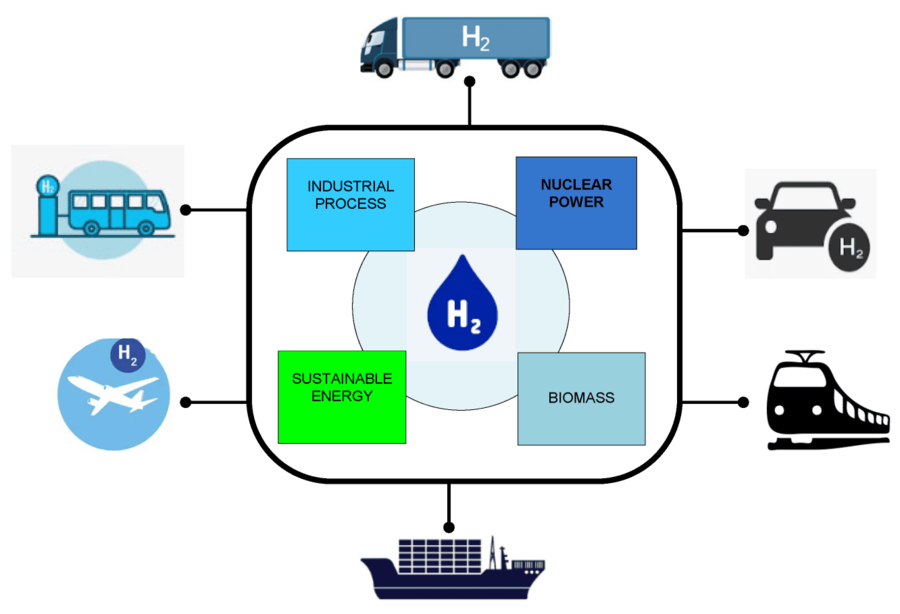
Hydrogen fuel cells represent the future with the smallest molecular weight and extremely high combustion intensity. Compare that to a traditional internal combustion engine. They convert chemical energy directly into electricity, reducing energy loss due to heat. When pure hydrogen fuel is used, the only by-products are heat and water, eliminating the cost of handling and storing toxic substances such as battery acid or diesel fuel, making our product a zero-emission, sustainable energy source.
How Do Hydrogen Fuel Cells Dominate the Future of Transportation?

Compact hydrogen storage tanks are transforming the clean energy landscape. Their efficiency, safety, and scalability empower you to embrace a sustainable future. Hycircle’s Compact Solid-State Hydrogen Storage Unit System exemplifies this innovation. By supporting advancements and investing in these solutions, you help unlock their potential and drive the global shift toward clean energy.
Why Hydrogen Storage Tanks Lead Clean Energy's Future?
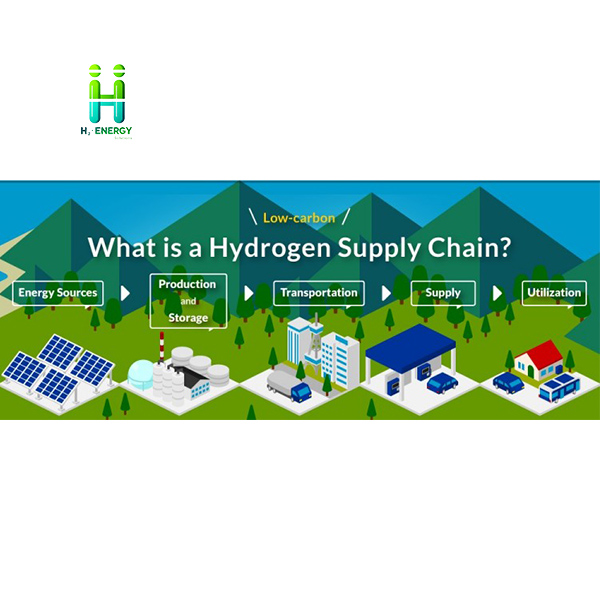
Hydrogen energy is seen as a key path for global sustainable development and energy transition. As a clean, efficient, safe, and sustainable energy source, it can be produced in various ways. It aligns with carbon reduction strategy and helps address energy security issues.
View the hydrogen energy chain distributing: from the hydrogen storage end to the fuel cell application