Hycircle to release new products soon— Introducing new domestic membrane for electrochemical applications
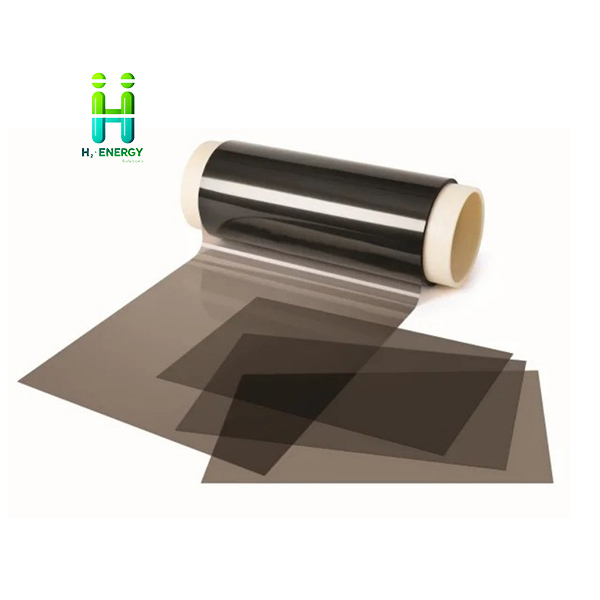
In recent years, the industrial chain focusing on hydrogen energy technology has been developing rapidly around the world. However, for key materials such as ionic membranes and proton exchange membranes for hydrogen energy technology applications, high prices have been an obstacle to the development and commercialization of large-scale applications.
Hycircle team has been focusing on the research and development of hydrogen energy technology for a long time, and in the past year or so, focusing on the development of ion exchange membrane and proton exchange membranes, and have finally succeeded in achieving the development of products with higher versatility and lower cost, which are able to be widely used in a wide range of electrochemical reactions. This article will focus on proton exchange membrane differ electrochemical reaction environments will be introduced in detail.

This PEM series of perfluorinated ionic membrane products always have more than 1000 applications in vanadium batteries, fuel cells, hydrogen production from electrolytic water,chlorine dioxide generator, copper recovery from etching solution, gold salt preparation, electrodialysis and other fields. This article focus on industrialization of perfluorinated sulfonic acid ion exchange membrane, with emphasis on Hycircle's upcoming new products.
PEM Proton exchange membrane for hydrogen fuel cell
Hydrogen Fuel Cell Membrane with ePTFE(expanded polytetrafluoroethylene) microporous reinforcing material was added to the traditional proton exchange membrane,which has the characteristics of high strength, high conductivity and low ion permeablity.


Proton exchange membrane for PEMWE
According to speaiflc appllcatlon scenarlcs, the company's PEM membrane used for electrolyzer from alectrolyfic watar can be divided into 11x series proton exchange membrane for industrial hydrogen producion and 11xW series proton exchange membrane for hydrogen health. Nepem praton exchange membrane for electrolyic water has the characteristics of hign conductvity low gas permeabity and high pressure resistance.


With a PEM electrolysis current density of 1.5 A/cm2, a minimum working load of 10% of the rated hydrogen production, and a hydrogen concentration in oxygen not exceeding 1.5 vol%, the hydrogen permeability of the proton membrane needs to be ≤0.008ml/(cm2-min).The VETPEM 115 membrane exhibits a low gas permeability at high pressure differentials similar to that of the Nafion 115. Approximately 0.006ml/(cm2-min)@4.5 MPa.
Both the original membrane and the membrane electrode were frozen at -30℃ for 90 hours, and the electrochemical properties did not show any change compared with those of the original membrane, indicating that the VETPEM membrane has a very good low-temperature resistance.
PEM Proton exchange membrane for vanadium flow battery
The strength,moisture reten tion and vanadium resistanceof ion exchange membranes were improved by introducin g special materials into the tape casting process.


Hycircle has developed various products in the field of ion exchange membranes for electrochemical reactions. The composite ion exchange membrane for electroplating adopts tape casting process, with appropriate molecular weight and ion exchange capacity of perfluorosulfonic acid resin, forming a composite membrane with uniform thickness, which is widely used in electrolytic chlorine dioxide generator, etching recovery of copper, gold salt preparation, amino acid refining, caustic soda preparation, electrodialysis and other electrolytic industries.

The composite ion exchange membrane used for PEM water treatment adopts high-strength PTFE mesh as the support layer and perfluorosulfonic acid resin with the most suitable molecular weight and ion exchange capacity, which has superb chemical properties and durability and is widely used in the field of water treatment, such as salt wastewater treatment and electrodialysis.

The breakthroughs in proton exchange membrane and ion exchange membrane dramatically reduced the cost of hydrogen technology research, which only is only half of the Nafion membrane. Although Hycircle's proton exchange membrane is still a third short of durability, it is comparable in all aspects of performance and is certainly a more cost-effective decision for countries with lower budgets.
In the future, Hycircle will continue to improve the design solutions in terms of durability, and strive to create the most convincing solutions for the global carbon reduction, and Hycircle and the leading technology to look up, and hydrogen energy to progress together.
How to guarantee the safety of hydrogen storage cylinders?
100 Yutong buses loaded with hydrogen are on the battlefield!
Related Article