HOME /NEWS /Industry News /33 pieces! 14 provinces! Summary of Hydrogen Energy Policies for June 2024 /
33 pieces! 14 provinces! Summary of Hydrogen Energy Policies for June 2024
2024-07-02
In June 2024, 10 ministerial hydrogen energy policies and 23 local hydrogen energy policies were released. Industry standards are the theme of this month's ministerial hydrogen energy policy, and the implementation of awards and subsidies is the theme of local hydrogen energy policies.
Ministry: Continuously paying attention to industry standards
The Ministry of Industry and Information Technology and the National Energy Administration have both proposed requirements for industry standards.
At the beginning of the month, the Ministry of Industry and Information Technology proposed a notice on the second batch of industry standard revision and foreign language version project plan for 2024, both of which included the development of two parts of hydrogen energy industry standards.
At the end of the month, the National Energy Administration issued a notice on publicly soliciting opinions on the industry standard revision plan and foreign language translation plan for proposed projects in the energy sector in 2024. 20 new hydrogen energy standards will be formulated, and 1 hydrogen energy standard will be revised, covering technical specifications, testing specifications, and engineering specifications in various fields such as testing methods, hydrogen storage stations, hydrogen power generation, renewable energy hydrogen production, and hydrogen storage pipelines.
From the perspective of energy conservation and carbon reduction, the role of hydrogen energy continues to be integrated into the industrial and energy systems. The four major energy conservation and carbon reduction action plans, namely the Special Action Plan for Energy Conservation and Carbon Reduction in the Steel Industry, the Special Action Plan for Energy Conservation and Carbon Reduction in the Refining Industry, the Special Action Plan for Energy Conservation and Carbon Reduction in the Synthetic Ammonia Industry, and the Special Action Plan for Energy Conservation and Carbon Reduction in the Water Mud Industry, all regard hydrogen energy as an important force in promoting the green transformation of the industry, marking the increasingly prominent position of hydrogen energy in China's energy conservation and emission reduction strategy.
The "Management Measures for Natural Gas Utilization" issued by the National Development and Reform Commission, starting from the orientation of "tightening the application of natural gas and leaving space for hydrogen energy application", on the one hand restricts the use of natural gas in the production of methanol and ammonia, and on the other hand, continuously expands the application scenarios of hydrogen energy in natural gas hydrogen blending projects, hydrogen fuel applications in transportation vehicles, hydrogen electricity coupling projects, and other projects.
Fourteen provinces (cities) including Inner Mongolia, Beijing, and Shanghai have issued policies related to hydrogen energy. Beijing, Shanghai, and Wuhan, Hubei have all issued multiple public announcements and notices in implementing reward and subsidy policies.
But what is even more eye-catching is that Guangdong Province has proposed a unique hydrogen energy high-speed policy. The construction of hydrogen energy highways has been carried out in multiple regions, mainly through measures such as multi regional cooperation and cost reduction. In terms of cost reduction, Guangdong's policies do not have particularly strong measures, only the reduction of parking fees and certain constraints on hydrogen prices. But Guangdong Province leverages the commercialization of hydrogen energy through a "cold chain logistics" approach, forming a network of trunk and branch logistics for the Pearl River Delta region through the construction of over 2000 hydrogen fuel logistics vehicles, hydrogen refueling stations, and hydrogen consumption. It actively explores sustainable commercial models and allows hydrogen energy to gain greater development space. It is innovative and easy to see results.
Hydrogen Energy - Making Cities Green - Promoting Hydrogen Energy Industry
Related Article
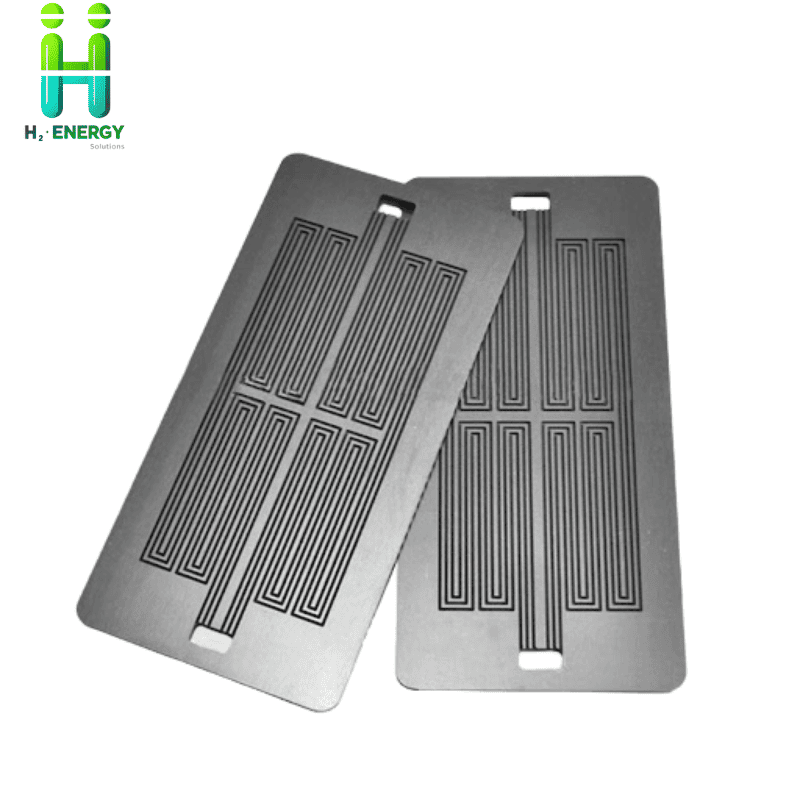
Currently, fuel cell systems in the vehicle field are mainly used in commercial vehicles, with the fuel cell stack (FC stack) as the core component being predominantly composed of graphite bipolar plates. Looking ahead, graphite bipolar plates are expected to maintain a large share of the commercial vehicle market for a considerable time to come
Analysis of the Production Process of Graphite Bipolar Plates
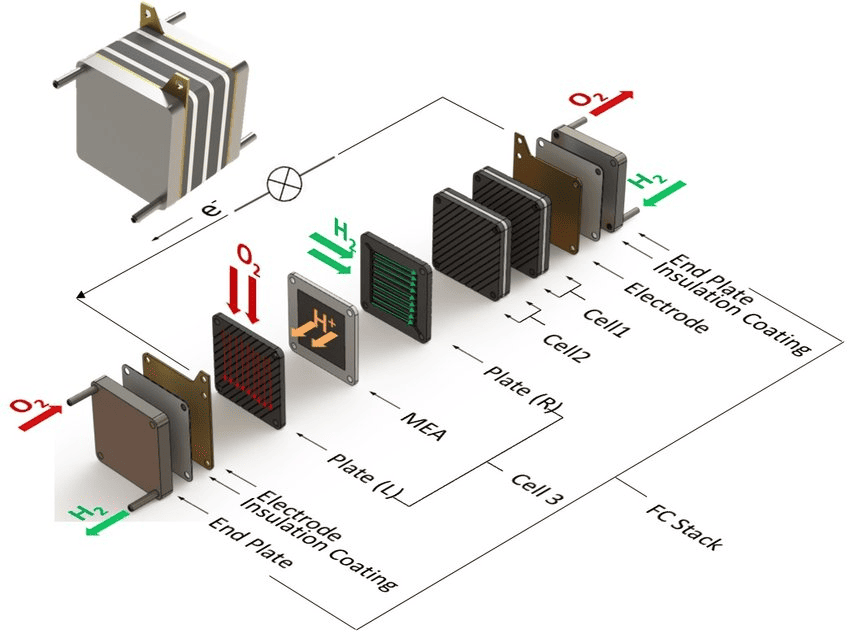
The fuel cell is frequently named fuel cell stack because it is made by stacking a plurality of cells of the smallest unit responsible for electrochemical reaction. Inside, hydrogen and oxygen, separated by the polymer membrane of the electrolyte, exchange ions and electrons and an electrochemical reaction occurs.
How Hydrogen Fuel Cell Structure Affects Performance?
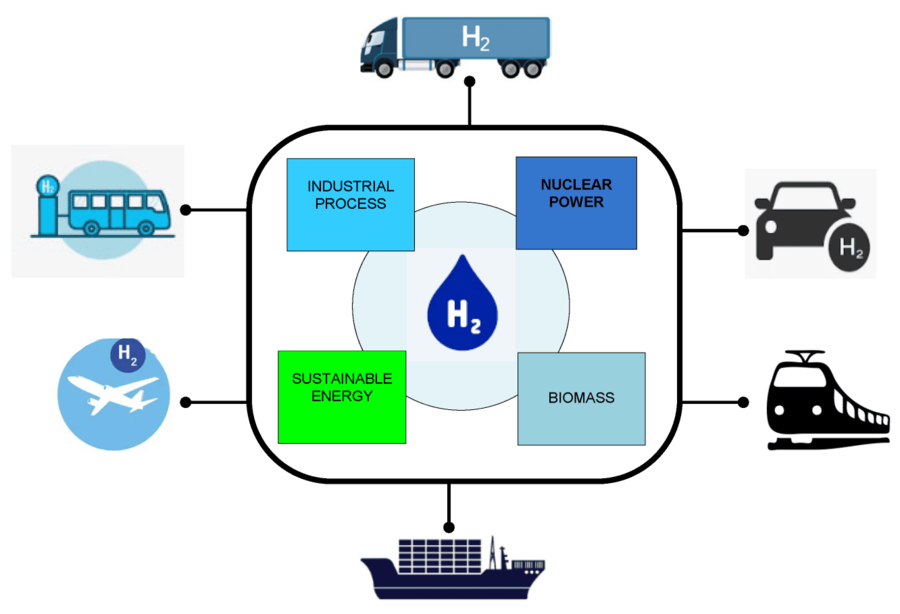
Hydrogen fuel cells represent the future with the smallest molecular weight and extremely high combustion intensity. Compare that to a traditional internal combustion engine. They convert chemical energy directly into electricity, reducing energy loss due to heat. When pure hydrogen fuel is used, the only by-products are heat and water, eliminating the cost of handling and storing toxic substances such as battery acid or diesel fuel, making our product a zero-emission, sustainable energy source.
How Do Hydrogen Fuel Cells Dominate the Future of Transportation?

Compact hydrogen storage tanks are transforming the clean energy landscape. Their efficiency, safety, and scalability empower you to embrace a sustainable future. Hycircle’s Compact Solid-State Hydrogen Storage Unit System exemplifies this innovation. By supporting advancements and investing in these solutions, you help unlock their potential and drive the global shift toward clean energy.
Why Hydrogen Storage Tanks Lead Clean Energy's Future?