New perspective on hydrogen fuel cell cooling technology: how water cooling and air cooling affect performance and cost
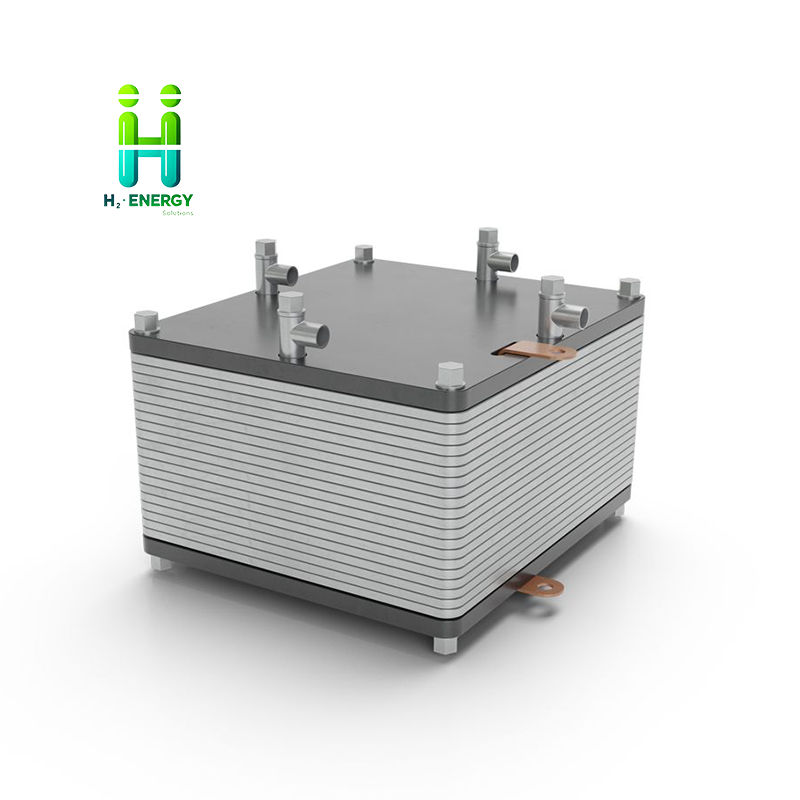
As a promising option for carbon-free hydrogen energy, hydrogen fuel cell continuously favored by the industry due to its identity as the ultimate energy. Extremely high battery life and fast energy replenishment are the most cost-effective advantages. However, different cooling systems will also give different degree to playing a role in kinds of advantages.
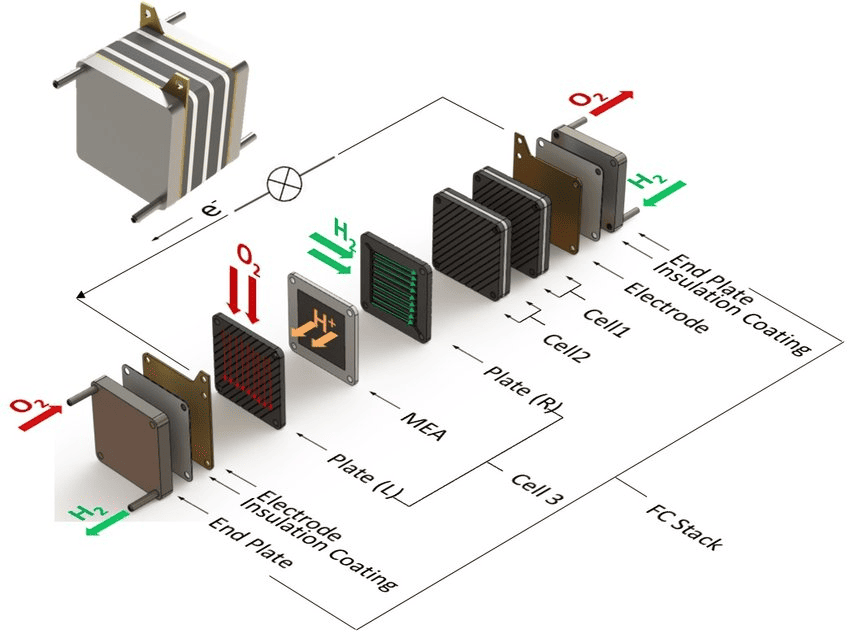
Hydrogen fuel cell, just as its name, is based on the reverse reaction of electrolyzed water, where hydrogen and oxygen undergo a chemical reaction in a specific device to generate electricity and water. During this process, hydrogen gas is used as fuel and is split into hydrogen ions and electrons at the anode. Electrons do work through an external circuit, while hydrogen ions pass through the electrolyte layer to reach the cathode. At the cathode, oxygen, hydrogen ions, and electrons combine to form water, thus completing the entire circuit.
Hydrogen fuel cell are separated into two types according to different cooling method: water- cooled system and air-cooled system.

Air Cooling
Air-cooled Hydrogen Fuel Cell uses air as a coolant, which has relatively low heat dissipation efficiency. Compared to water cooling systems, the air cooling system has a stronger adaptability to the environment and a more flexible body. Because the simpler construction, it is no need to Spend a lot of cost to maintain Cooling system components. So far, air-cooled hydrogen fuel cells have been widely used in unmanned aerial vehicles, hydrogen powered vehicle, communication portable backup power supply and so on.

Liquid Cooling
Water-cooled Hydrogen Fuel Cell efficient heat dissipation is achieved through the circulation of coolant in the battery pack, which has more better heat dissipation efficiency. Because this type hydrogen fuel cell add the components such as cooling water circulation and heat exchange, which also has higher production and maintenance costs.
It also has disadvantage. Not suitable for use in low-temperature environments individually. When water-cooled hydrogen fuel cells must be used at low temperatures, additional heating measures are required to prevent the cooling water from freezing, which may increase the energy consumption and complexity of the system. Normally, the water- cooled is used for larger power demands, such as 6KW and more lager power. It is a bit heave and inconvenient to move around and widely application to commercial vehicle, Ships, fixed power generation and so on.
In normal life, we should choose different hydrogen fuel cell cooling system according to factors such as heat dissipation requirements, cost, usage scenarios, and so on. If high heat dissipation requirements are needed, the usage scenario is relatively fixed, and space and energy consumption are not the primary considerations, water- cooled is a good choice. If there are high requirements for energy conservation and environmental protection, and the usage environment is warm all year round, air- cooled has more advantages.
It is worth noting that with the continuous advancement of technology, both water-cooled and air-cooled technologies are constantly improving and enhancing. In the future, more mature and applicable heat dissipation solutions may emerge, and we also need to closely monitor the development trends of related technologies.
Comparison between hydrogen fuel cell and other battery technologies
Hydrogen Energy - Making Cities Green - Promoting Hydrogen Energy Industry
Related Article